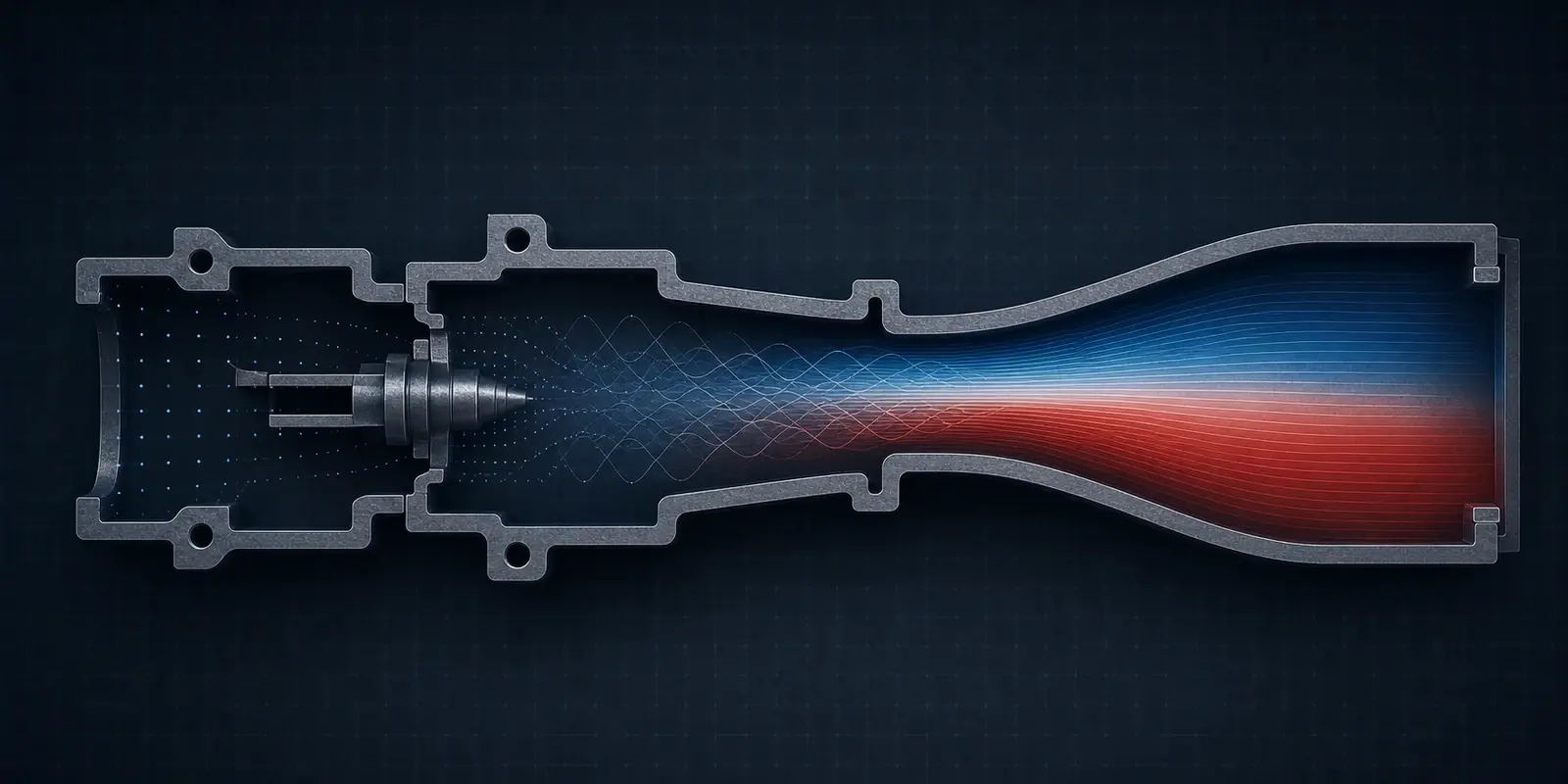
Surrogate and Reduced-Order Models
Build fast models that reproduce important physical fields for design exploration, optimization, and repeated engineering evaluation.
FOURIER NEURAL OPERATORS
Fourier Neural Operators provide fast field prediction when repeated evaluations are needed inside a well-defined physical domain. M² Engineering builds them from validated simulation data and verifies their accuracy, limitations, and operating range before they are used for engineering decisions.
APPLICATIONS
Neural operators become useful when many field predictions are needed across a previously validated and clearly defined operating domain.
Build fast models that reproduce important physical fields for design exploration, optimization, and repeated engineering evaluation.
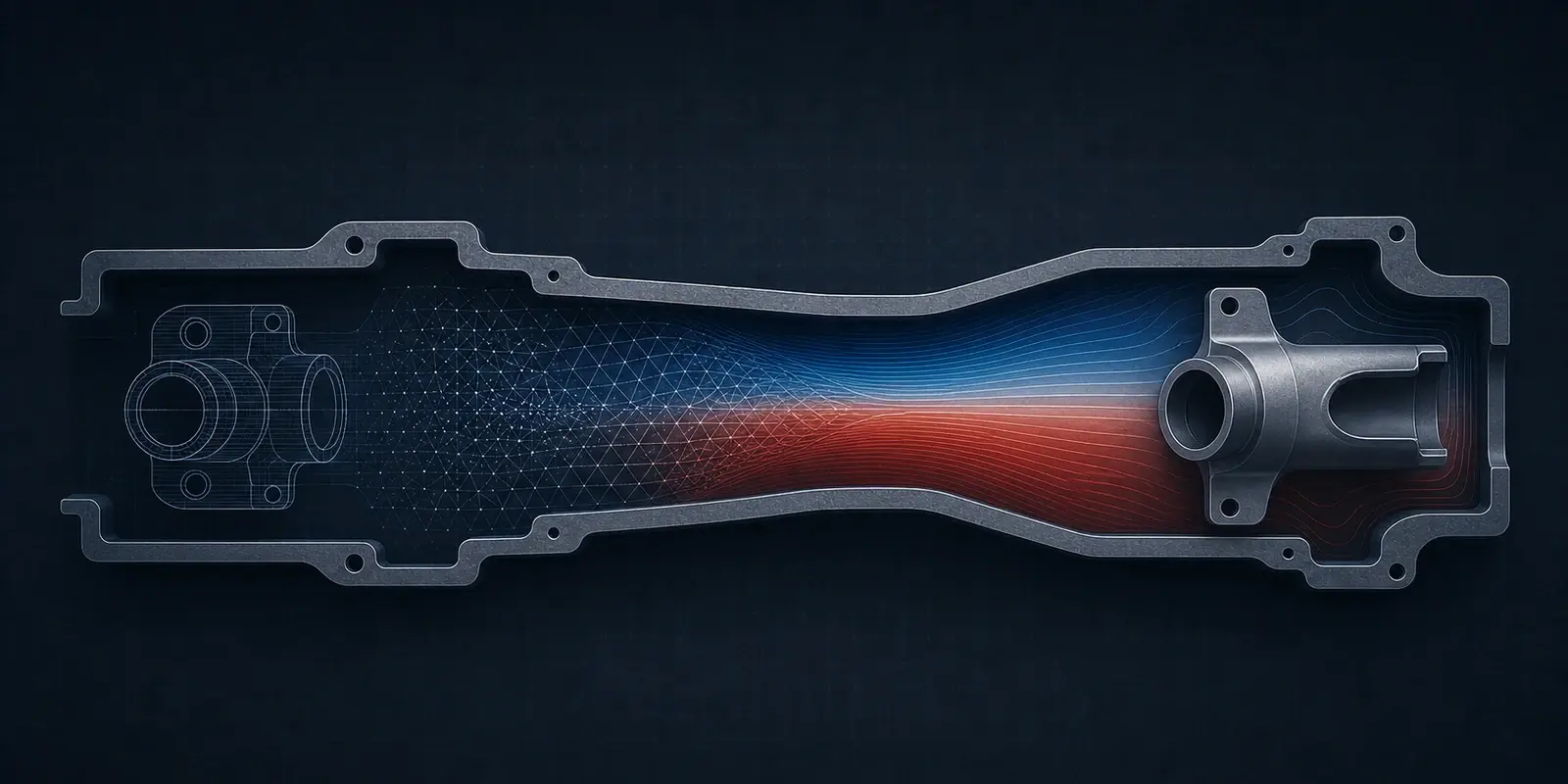
Connect geometry preparation, simulation, validation, post-processing, and interpretation into repeatable computational workflows.
PHENOMENA
Fast approximation of physical fields within a defined operating domain.
Learning mappings between system inputs and spatial solution fields.
Efficient evaluation across many design or operating conditions.
Estimating confidence and identifying regions of weaker reliability.
Comparing predictions against withheld simulations or reference data.
Confirming accuracy, limitations, and suitability for engineering use.
Phenomenon 1 of 6
PROJECT OUTPUTS
A trained neural operator or reduced-order model defined for the agreed scope.
Documented inputs, outputs, assumptions, and valid prediction range.
Reproducible data preparation, training, validation, and inference procedures.
Comparisons with withheld cases and available reference data.
Error summaries, uncertainty, failure modes, and known model boundaries.
Inference outputs, integration guidance, and technical reporting for engineering use.
Deliverable 1 of 6
SERVICE FIT
Validated high-fidelity data can support repeated field prediction inside a documented operating domain.
Curated simulation data, defined variables, validation cases, and clear domain limits.
Rapid design-space screening, operating-window evaluation, repeated prediction, and workflow acceleration.
The physical domain is not yet understood, the training data are insufficient, or a first-principles model is required rather than a surrogate.
Describe the repeated prediction task, available simulation data, operating domain, and engineering decision the model must support. M² Engineering will determine whether a neural operator is appropriate and how it should be validated.
Discuss Your Project