Physics
First
M² Engineering provides computational engineering services for complex thermal-fluid, reactive, electrochemical, process, and energy systems. Physics establishes the problem. AI accelerates evaluation within verified domains.
Engineering Capabilities
Each capability addresses a different governing problem. Select the one that matches the physics of the system and the decision the analysis must support.
Computational Fluid Dynamics
Understand how fluids move, mix, transfer heat, and create pressure loss inside a system.
Coupled Physics Simulation
Study how heat, flow, reactions, structures, and electrical effects influence one another.
Thermal Engineering
Evaluate heat loads, temperature limits, and the best way to heat or cool a system.
Process Engineering
Understand how equipment, material flows, energy use, and operating conditions affect overall process performance.
Engineering Optimization
Compare design options and find the best balance between performance, constraints, and cost.
Neural Operators
Build physics-aware surrogate models for repeated prediction across defined engineering domains.
Capability 1
Representative Studies
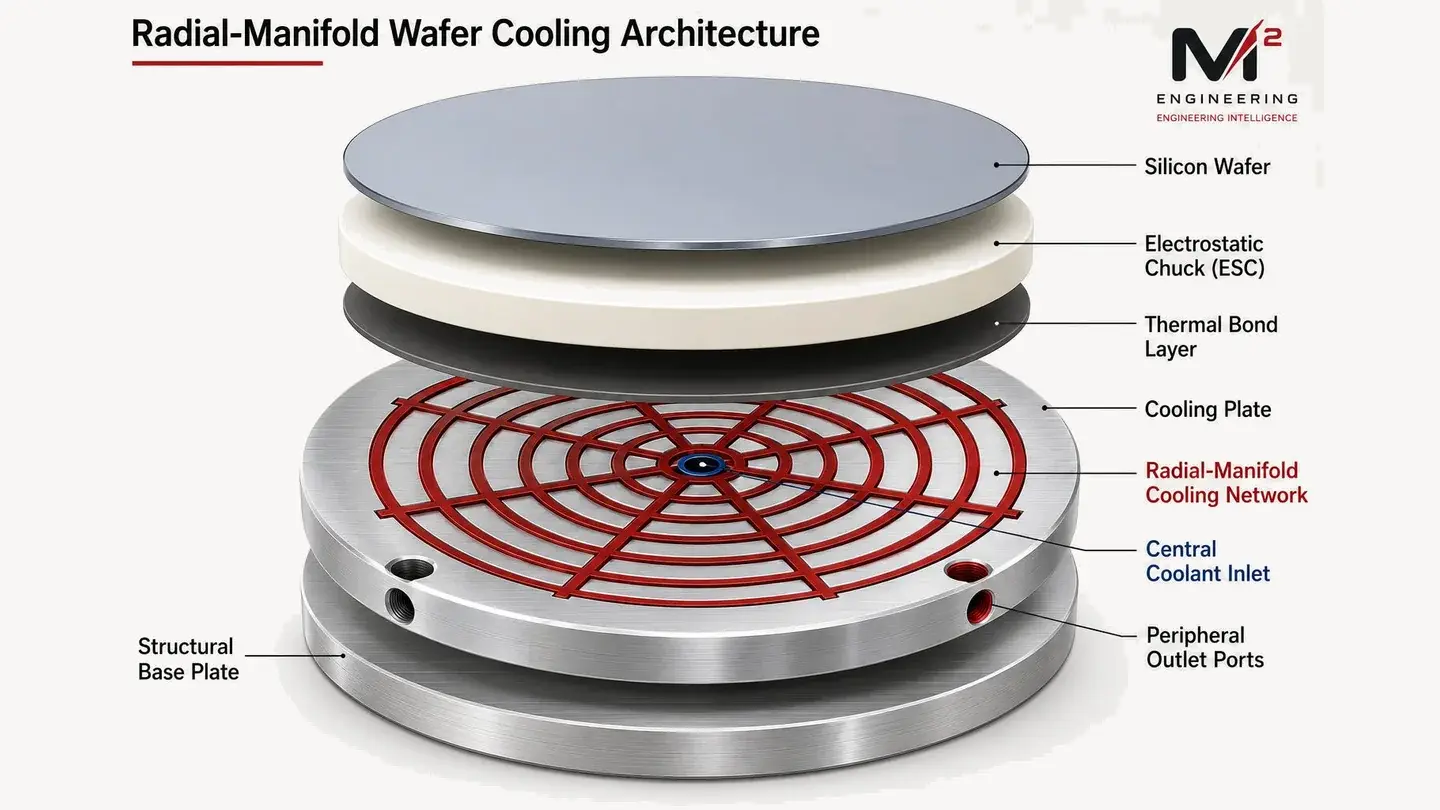
Semiconductor Wafer Cooling
Compares wafer cooling architectures for plasma-induced hotspots and shows how manifold design affects temperature uniformity on 300 mm wafers.
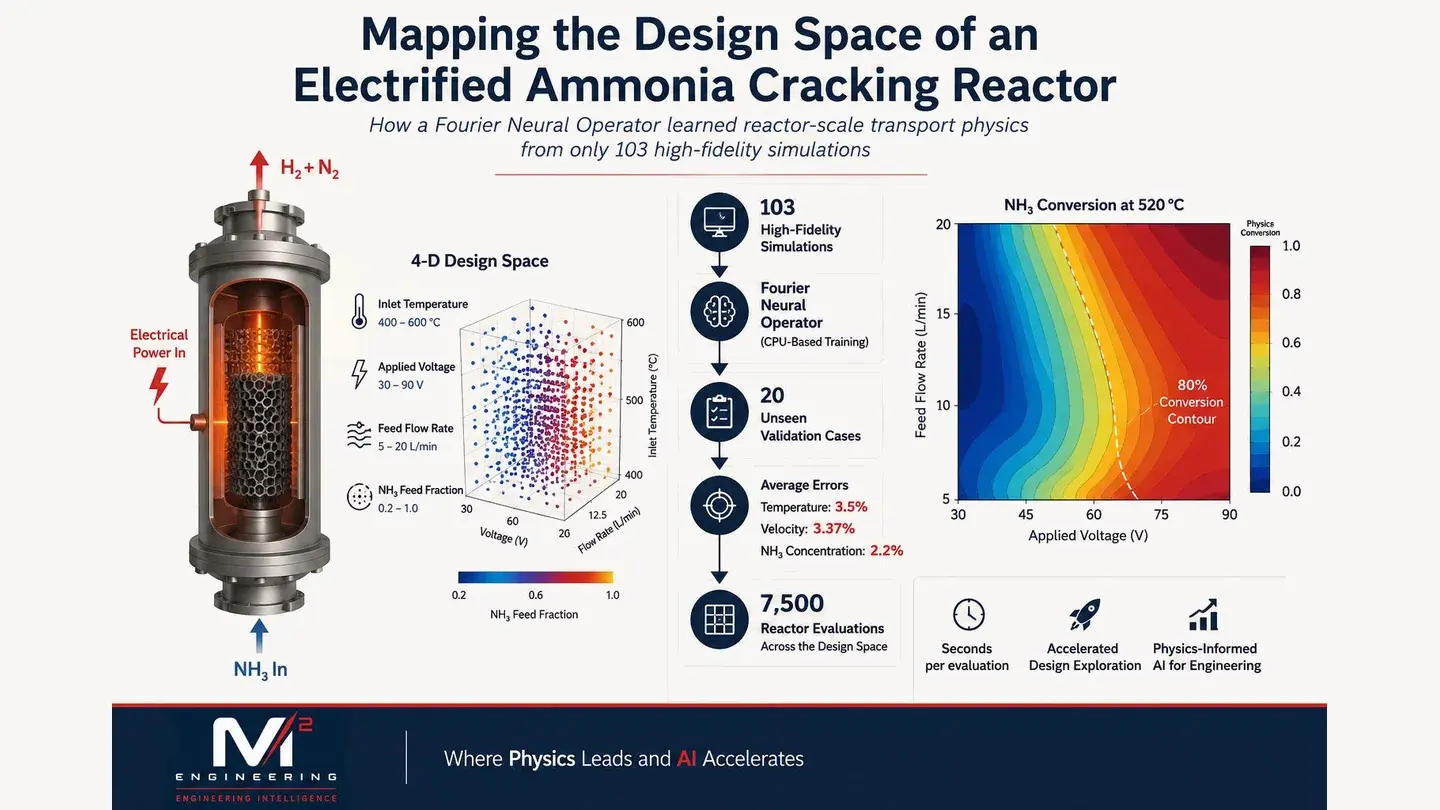
Mapping the Design Space of an Electrified Ammonia Cracking Reactor
A surrogate trained on 103 high-fidelity reactor simulations was then used to evaluate about 7,500 design points inside a defined parameter space.
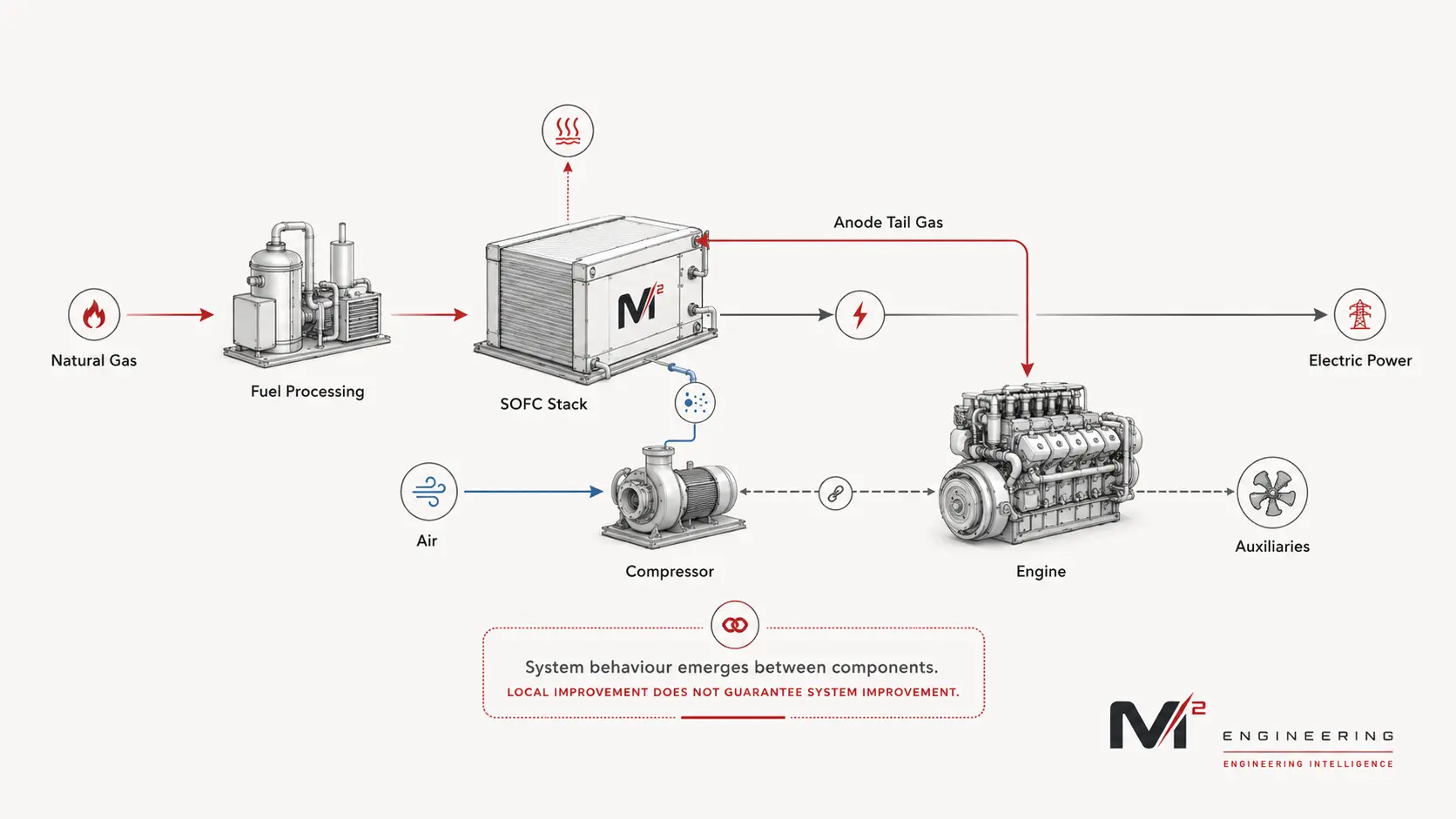
The Best Component Can Still Produce the Wrong System
Shows why a locally optimized component can still fail system targets when interactions, constraints, and operating envelopes are ignored.
Study 1
Why Physics Still Leads
AI can accelerate engineering workflows, but engineering judgment remains responsible for framing the problem, selecting the model, validating the evidence, and interpreting the result.
Frame the Right Question
Define the engineering decision before selecting the model.
Identify the Governing Physics
Determine which mechanisms control performance and which can be simplified.
Test the Evidence and Assumptions
Confirm that the data, boundary conditions, and model domain are credible.
Interpret the Prediction
Decide whether the result is suitable for design, operation, or further study.
Begin a technical conversation.
Share the physical system, available models or data, and the decision the analysis must support.
Discuss Your Project