Hydrogen is widely regarded as a cornerstone of future low-carbon energy systems, yet its large-scale deployment remains constrained by storage and transportation challenges. Ammonia has emerged as one of the most promising hydrogen carriers because of its high hydrogen density and established global distribution infrastructure. Recovering hydrogen efficiently at the point of use, however, requires ammonia cracking reactors that involve tightly coupled interactions between fluid flow, electrical current transport, Joule heating, heat transfer, and chemical reaction kinetics.
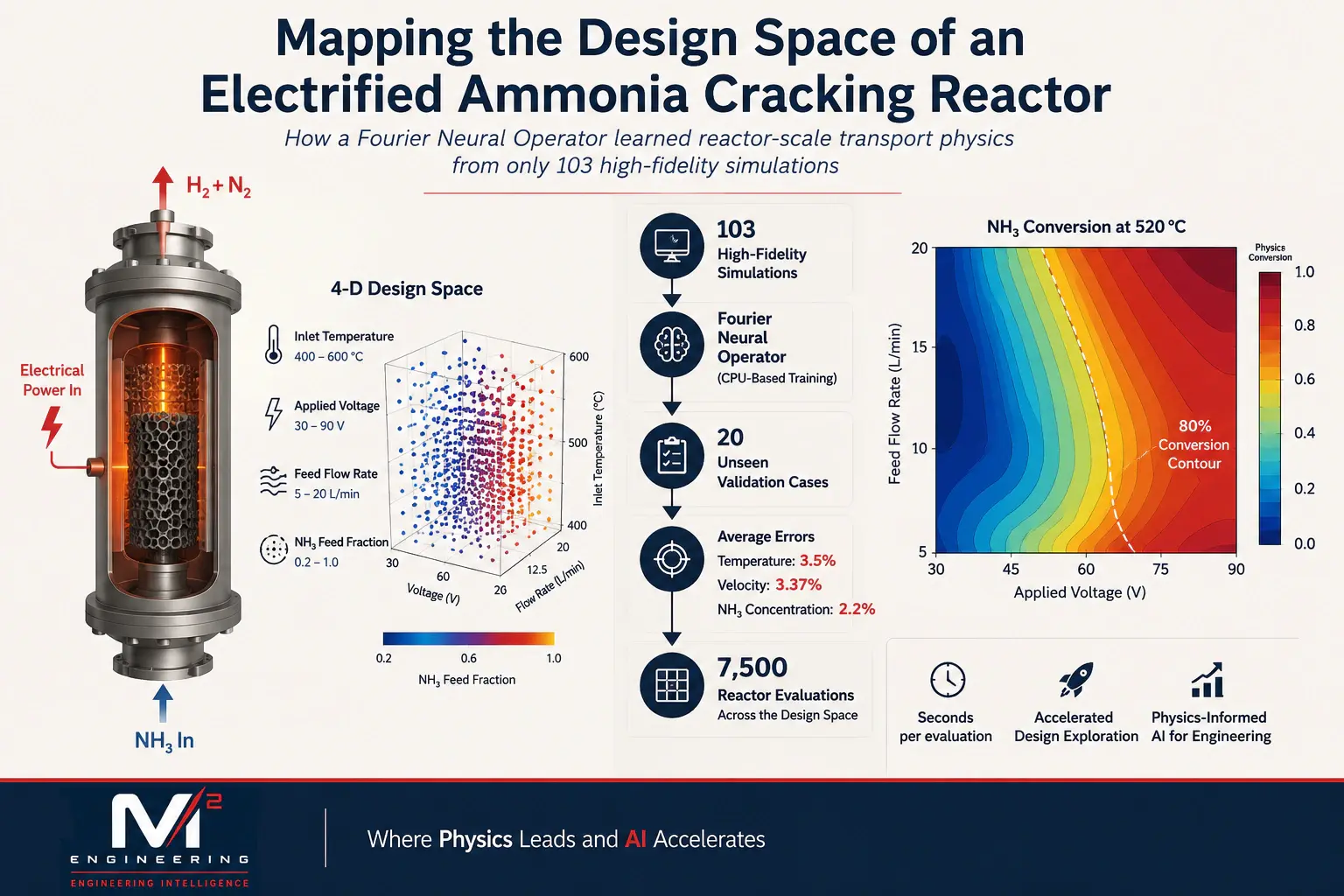
In this study, a coupled electro-thermal-reactive transport model was developed to investigate an electrified ammonia cracking reactor across a four-dimensional design space defined by inlet temperature, applied voltage, feed flow rate, and ammonia feed composition. A dataset of 103 high-fidelity simulations was generated to train a Fourier Neural Operator using a standard CPU-based workflow. The resulting surrogate model was validated against 20 previously unseen operating conditions, achieving average prediction errors of 3.5% for temperature, 3.37% for velocity, and 2.2% for NH₃ concentration.
Once validated, the surrogate was used to evaluate 7,500 reactor operating conditions in seconds, enabling rapid exploration of reactor performance while preserving the underlying transport physics. Rather than replacing physics-based simulation, this work demonstrates how operator learning can extend its reach, transforming a limited set of high-fidelity simulations into a practical engineering tool for accelerated reactor design and coupled-physics optimization.
Key Results
- Developed a coupled electro-thermal-reactive transport model of an electrified ammonia cracking reactor.
- Generated 103 high-fidelity simulations across a four-dimensional operating space.
- Trained a Fourier Neural Operator using standard CPU-based hardware.
- Leveraged approximately 5 million physics-informed field values during training.
- Achieved strong predictive accuracy across 20 unseen operating conditions, with average validation errors of: temperature 3.5%, velocity 3.4%, and NH₃ concentration 2.2%.
- Expanded the original simulation dataset into 7,500 operating-condition evaluations.
- Generated reactor operating maps linking temperature, voltage, flow rate, and ammonia conversion.
Building the Electrified Reactor Model
Electrified reactors differ from conventional catalytic reactors in one important way: heat is generated inside the reaction zone rather than supplied from an external furnace. This seemingly simple distinction fundamentally changes how energy is delivered to the process and how reactor performance responds to operating conditions.
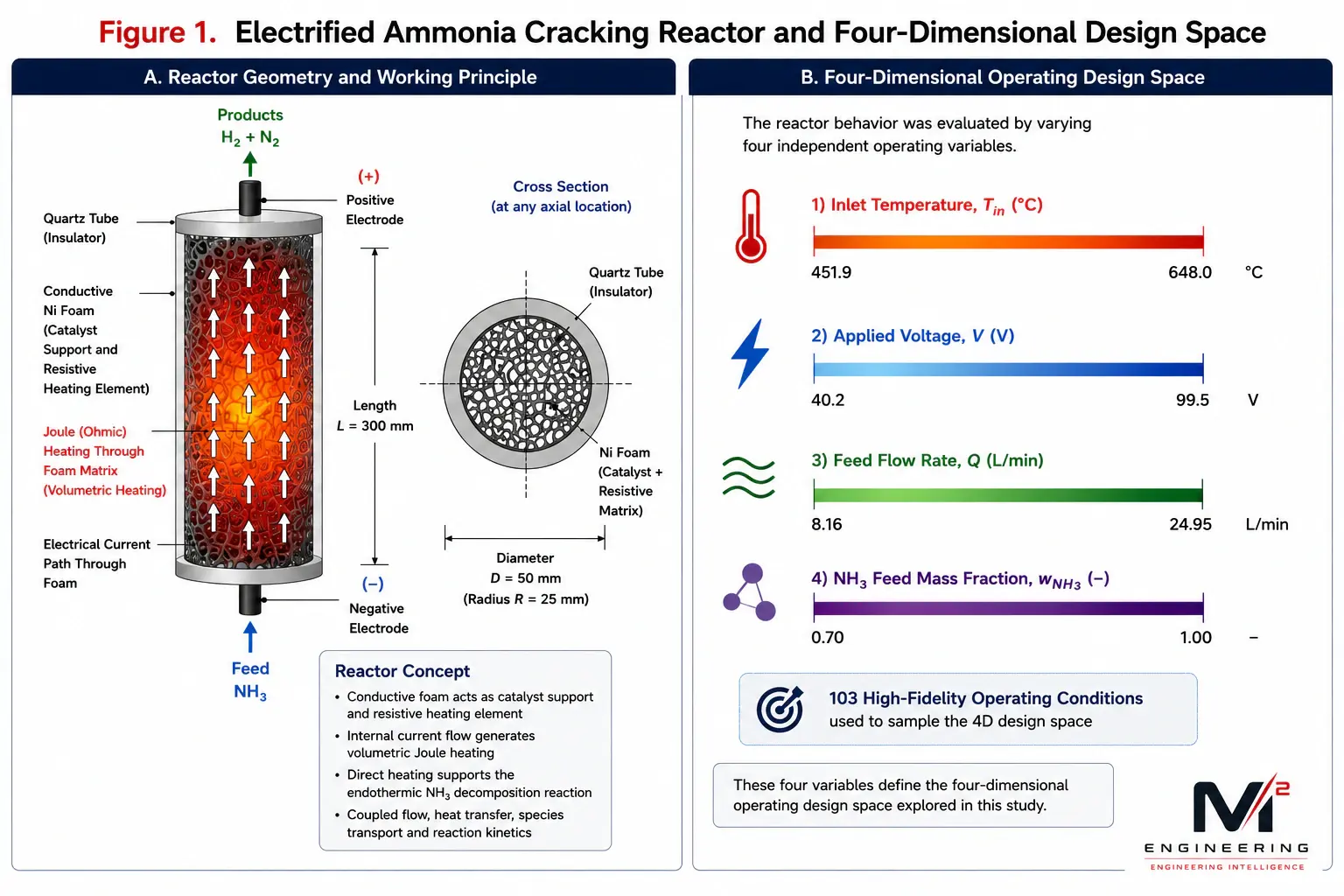
The reactor investigated in this study consists of a cylindrical packed reactor containing a conductive porous catalyst structure. Pure ammonia enters through the bottom inlet, flows upward through the catalyst region, and exits from the top outlet. When an electrical potential is applied across the conductive catalyst matrix, electrical current passes directly through the porous structure and generates volumetric Joule heating throughout the reactor volume. Rather than heating the catalyst from the outside inward, thermal energy is produced precisely where the reaction occurs.
This configuration is particularly attractive for ammonia cracking because the decomposition reaction is strongly endothermic. Sustaining high conversion requires a continuous supply of energy, and internal Joule heating offers a direct and potentially efficient pathway for meeting that demand. At the same time, reactor performance becomes governed by the interaction of several coupled physical processes. Flow transport determines how long reactants remain inside the catalyst bed, electrical heating establishes the temperature field, and chemical kinetics dictate how rapidly ammonia is converted into hydrogen and nitrogen.
Capturing these interactions requires more than an isolated heat-transfer or reaction model. A coupled electro-thermal-reactive transport framework was developed to simultaneously resolve fluid flow through the porous catalyst structure, heat generation and transport, electrical current distribution, species transport, and ammonia decomposition kinetics. Because each physical process influences the others, the resulting reactor behavior emerges from their collective interaction rather than from any single mechanism alone.
The reactor geometry considered in this study has an active length of 300 mm and a radius of 25 mm. Four independent operating variables were selected to define the design space: inlet temperature, applied voltage, feed flow rate, and ammonia feed composition. Together, these variables capture the primary levers available to a reactor designer and establish the operating envelope explored throughout the remainder of this study.
Figure 1 illustrates both the reactor configuration and the operating design space. While the geometry itself is relatively simple, the interactions between transport, heating, and reaction create a rich coupled-physics problem that makes reactor performance highly sensitive to operating conditions. Understanding those interactions is the central objective of the work presented here.
From 103 Simulations to a Reactor Surrogate
Once the reactor model was established, the next challenge was not solving a single operating condition but understanding how reactor behavior evolved across a broader design space. In practice, reactor designers rarely care about only one combination of temperature, voltage, flow rate, and feed composition. The more important question is how performance changes when these variables are adjusted simultaneously and which combinations produce the most desirable operating conditions.
Exploring such a design space exclusively through high-fidelity simulation quickly becomes expensive. Every operating condition requires the coupled solution of fluid flow, heat transfer, electrical current transport, species transport, and reaction kinetics. While a single simulation provides valuable insight into reactor behavior, comprehensive design exploration may require hundreds or even thousands of evaluations.
To address this challenge, four operating variables were selected as independent design parameters: inlet temperature, applied voltage, feed flow rate, and ammonia feed composition. Together, these variables define a four-dimensional operating space that captures the primary controls available to a reactor designer. To capture reactor behavior across the operating envelope, 103 high-fidelity simulations were performed spanning a range of inlet temperatures, applied voltages, flow rates, and ammonia feed compositions. Collectively, these simulations sampled the 4D design space and provided the training data used to develop the surrogate model.
Each simulation contained considerably more information than a single conversion value or outlet temperature. For every operating condition, the model generated complete spatial distributions of temperature, velocity, and ammonia concentration throughout the reactor domain. Collectively, these simulations formed a digital representation of how the reactor responds to changes in operating conditions.
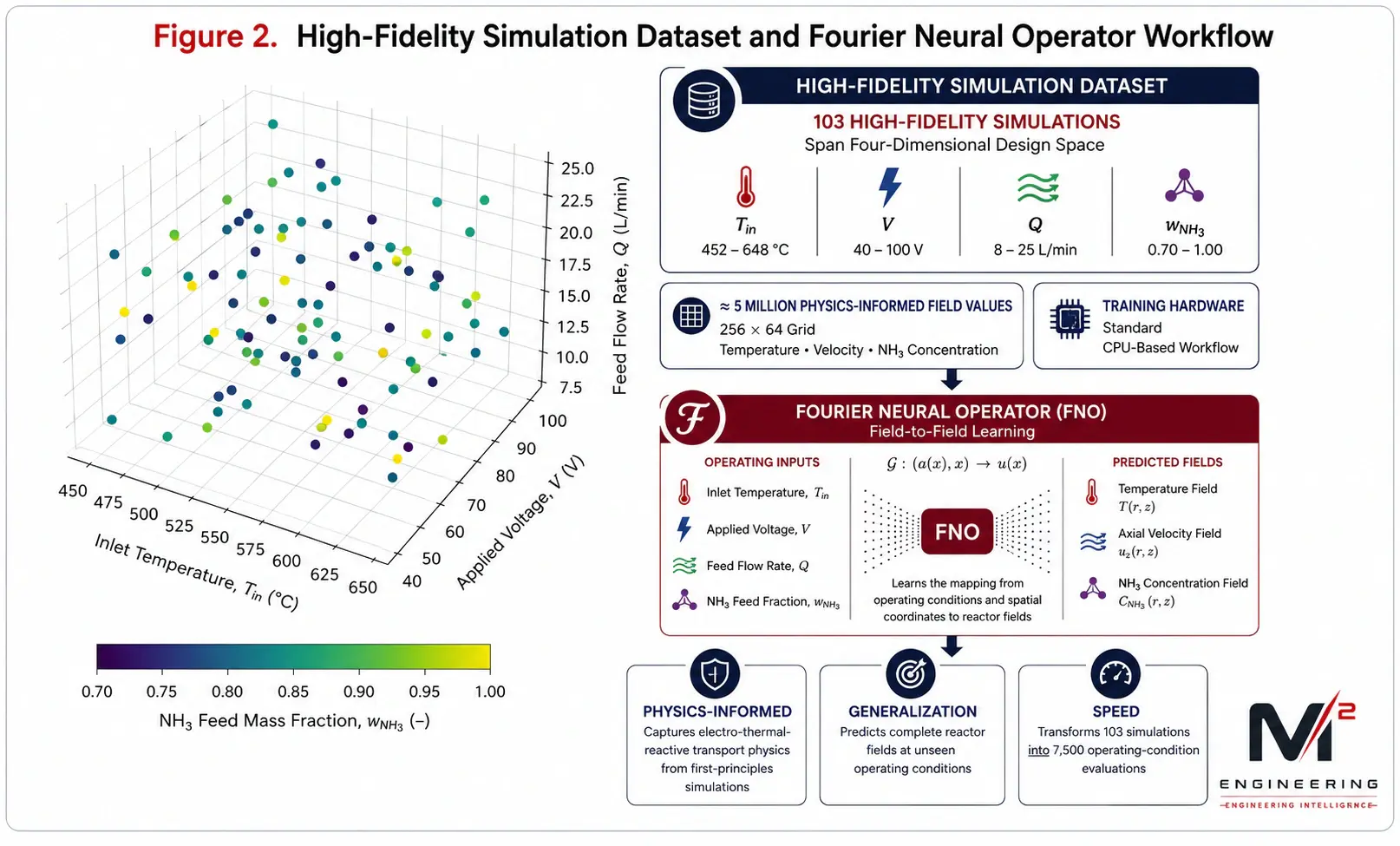
Figure 2 illustrates how the 103 simulations populate the four-dimensional design space. Although only three dimensions can be displayed simultaneously on axis, with color representing the inlet NH₃ mass fraction, the figure demonstrates the broad coverage achieved across the four-dimensional design space. This distribution of operating conditions provides the foundation for training a surrogate model capable of generalizing across a wide range of reactor behaviors.
Why 103 Simulations Were Sufficient
At first glance, a training dataset consisting of only 103 simulations may appear surprisingly small for a machine-learning application. However, the effective size of the dataset is substantially larger than the number of operating conditions alone would suggest.
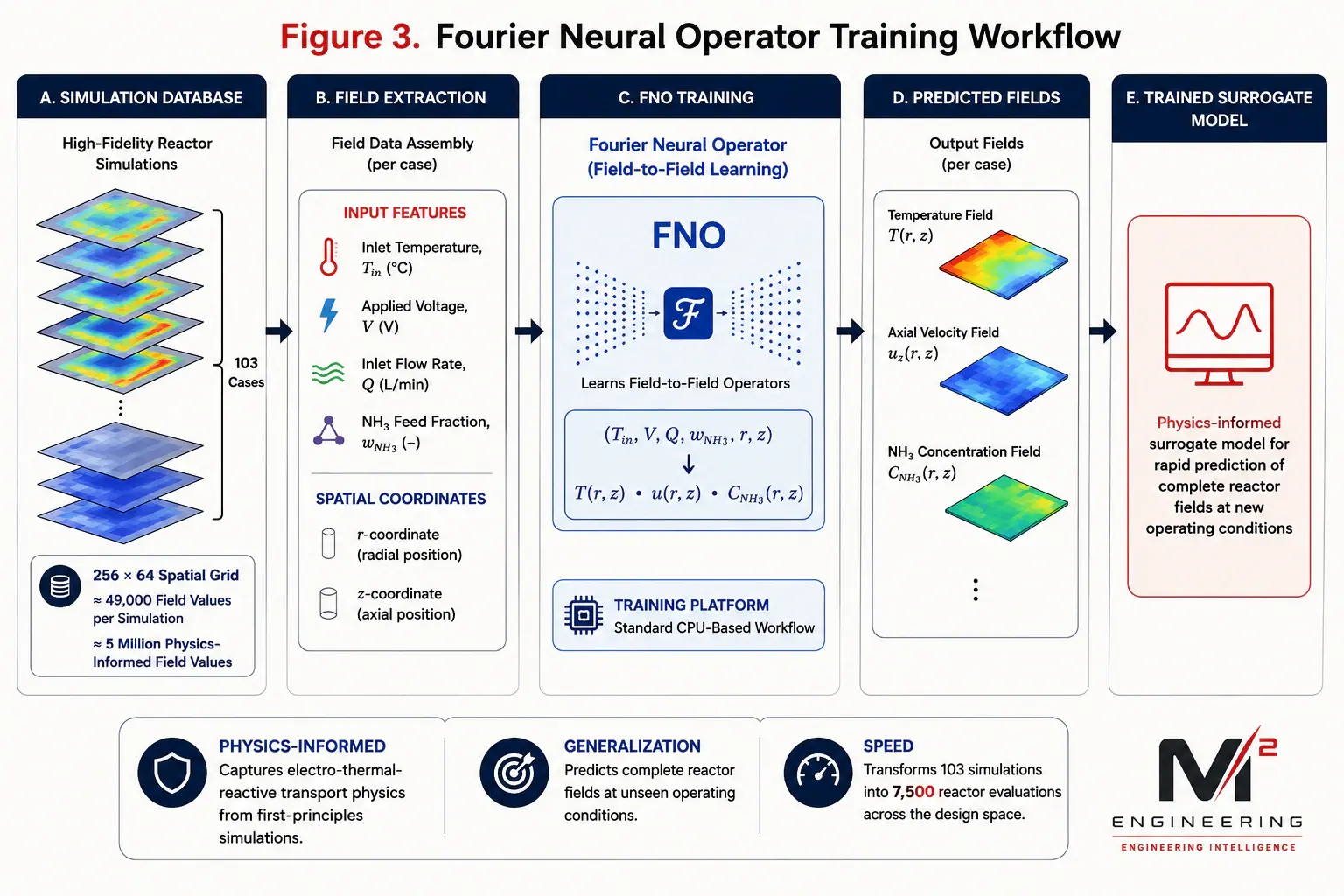
Each simulation generated complete spatial distributions of temperature, velocity, and ammonia concentration throughout the reactor domain. The computational grid contained 256 axial locations and 64 radial locations, corresponding to 16,384 spatial points per field. Because three physical fields were used during training, each simulation contributed approximately 49,000 field values describing the physical state of the reactor. Across the full dataset, the model was therefore trained on roughly five million physics-informed field values rather than merely 103 operating points. More importantly, these values were not independent samples. They were connected through the governing transport and reaction physics embedded within each simulation, providing a rich representation of reactor behavior across the operating space.
Training efficiency was further improved through the use of a structured Design of Experiments strategy. Rather than generating large numbers of redundant simulations, the 103 operating conditions were distributed across the four-dimensional design space to maximize coverage of temperature, voltage, flow rate, and feed composition. The goal was not to maximize the number of simulations, but to maximize the amount of useful physical information contained within the dataset.
Dataset Summary
- High-Fidelity Simulations: 103
- Spatial Grid: 256 × 64
- Spatial Locations per Simulation: 16,384
- Predicted Fields: Temperature, Velocity, NH₃ Concentration
- Approximate Field Values per Simulation: 49,000
- Total Physics-Informed Training Values: ~5 Million
The resulting dataset was subsequently used to train a Fourier Neural Operator (FNO). Unlike traditional regression models that predict only scalar outputs, FNOs learn mappings between operating conditions and complete field solutions. In practical terms, the model learns how operating parameters influence temperature, velocity, and ammonia concentration throughout the reactor rather than predicting only aggregate performance metrics such as conversion or outlet temperature.
For this study, the operating variables and spatial coordinates were supplied as model inputs, while the corresponding reactor fields served as outputs. During training, the FNO learned the relationship between operating conditions and the resulting reactor state, effectively creating a surrogate representation of the underlying physics.
An important practical aspect of this workflow is that model training was performed entirely using standard CPU-based hardware rather than dedicated GPU resources. While operator-learning methods are often associated with specialized computing infrastructure, the relatively compact dataset used here demonstrates that such workflows can be implemented using computational resources already available to many engineering teams. In this case, the primary computational investment remained the generation of high-quality simulation data rather than surrogate training itself.
Figure 3 summarizes the overall workflow. High-fidelity simulations provide the physical foundation, the FNO learns the relationships embedded within the dataset, and the resulting surrogate becomes a rapidly deployable representation of reactor behavior across the operating space.
Validation and Computational Scaling
A surrogate model is only valuable if it remains faithful to the underlying physics. Regardless of the sophistication of the machine-learning architecture, the ultimate test is whether it can accurately reproduce reactor behavior under operating conditions that were not included in the training dataset.
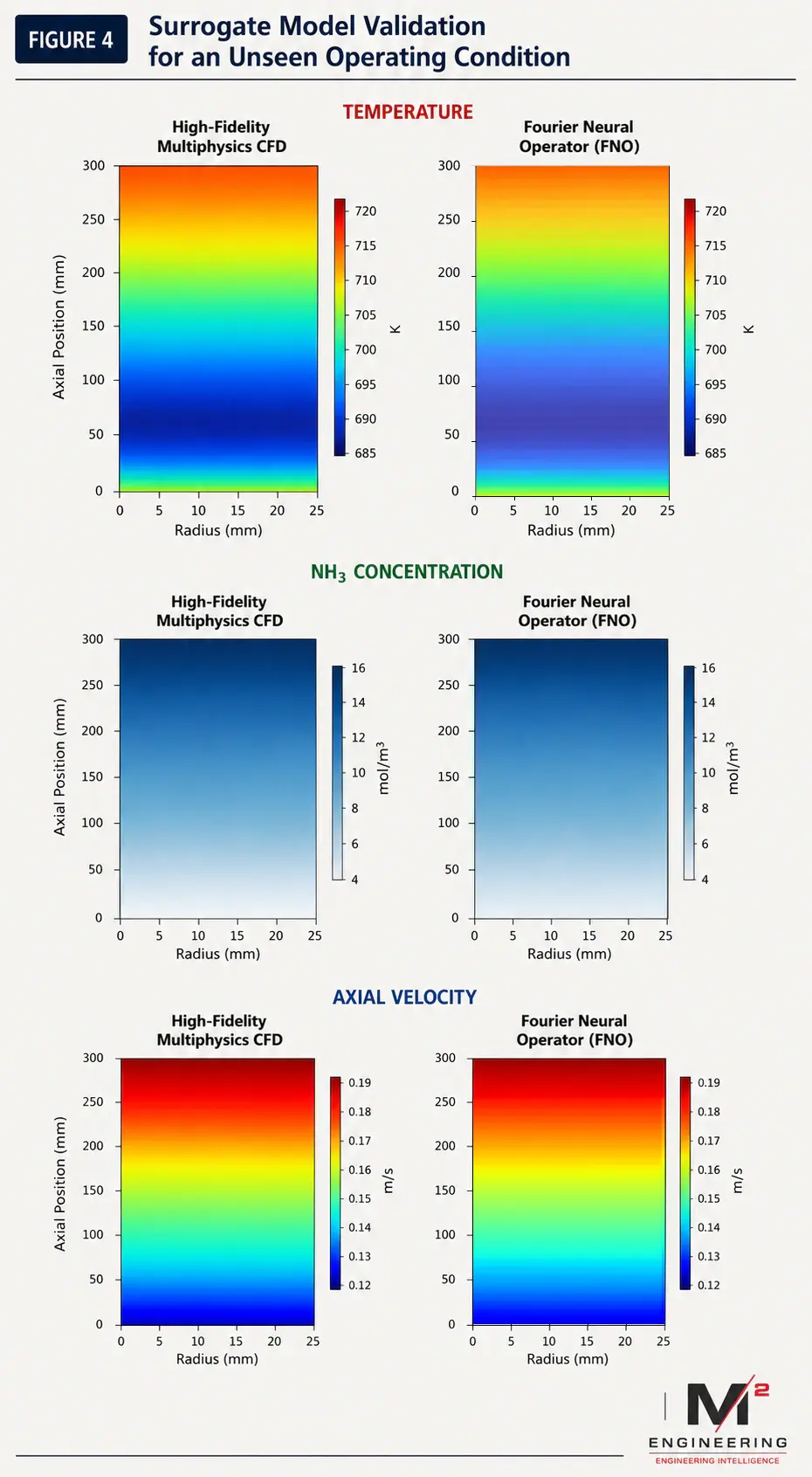
To evaluate predictive performance, the trained Fourier Neural Operator was validated against 20 operating conditions that were entirely excluded from the training process. For each validation case, the model received only the operating parameters as inputs and reconstructed the corresponding temperature, velocity, and ammonia concentration fields throughout the reactor domain. These predictions were then compared directly against the corresponding high-fidelity simulation results.
Figure 4 presents a representative comparison between the surrogate model and the high-fidelity simulation for one of the unseen validation cases. Across all three fields, the agreement is remarkably strong. The predicted temperature distribution accurately captures the thermal gradients generated by internal Joule heating, while the velocity field reproduces the dominant transport behavior governing reactor residence time. Most importantly, the model successfully reconstructs the ammonia concentration field, which emerges from the coupled interaction of flow transport, heat transfer, and reaction kinetics.
While visual agreement provides qualitative confidence in the model predictions, quantitative validation across all 20 unseen operating conditions offers a more rigorous assessment of surrogate performance. The average prediction errors obtained across the validation dataset are summarized below.
Variable Average Validation Error
Temperature 3.5%
Velocity 3.4%
NH₃ Concentration 2.2%
These results demonstrate that the surrogate successfully learned the dominant electro-thermal-reactive behavior governing reactor performance while maintaining strong predictive accuracy across operating conditions that were not encountered during training. Notably, all three fields were predicted with average errors below 4%, indicating that the model generalized effectively throughout the operating space.
The relatively low NH₃ concentration error is particularly encouraging because species distributions emerge from the combined influence of fluid transport, heat transfer, and chemical reaction kinetics. Accurate prediction of NH₃ concentration therefore suggests that the surrogate successfully captured the coupled physics governing ammonia decomposition rather than merely reproducing isolated field variables.
Validation, however, was not the primary objective of the surrogate model. The real value lies in what becomes possible once predictive accuracy has been established.
Although the model was trained using only 103 high-fidelity simulations, it was subsequently used to evaluate thousands of additional operating conditions across the reactor design space. For each operating map presented in this study, the surrogate generated predictions on a 50 × 50 parameter grid, corresponding to 2,500 unique operating conditions. Across the three operating maps discussed in the following sections, the model evaluated a total of 7,500 operating points while preserving the spatial fidelity of the original simulations.
This capability fundamentally changes the role of simulation in the engineering workflow. Rather than using high-fidelity models exclusively for isolated analyses, the trained surrogate transforms those simulations into a continuously accessible design tool capable of exploring broad regions of the operating space within seconds. The resulting workflow enables engineers to move beyond individual simulations and toward rapid, physics-informed exploration of reactor behavior across thousands of potential operating conditions.
Exploring the Reactor Operating Space
The true value of a reactor model lies not in its ability to predict a single operating condition, but in its ability to reveal how reactor performance evolves across a broad operating space. While individual simulations provide detailed snapshots of reactor behavior, operating maps expose the relationships between competing design variables and help identify practical pathways for achieving desired performance targets. Using the validated surrogate model, reactor conversion was evaluated across thousands of operating conditions to generate a series of operating maps. Together, these maps reveal how temperature, electrical input, and residence time interact to govern ammonia decomposition within the electrified reactor.
Temperature–Flow Rate Operating Map
The first operating map explores the combined influence of inlet temperature and feed flow rate on ammonia conversion. For this analysis, the applied voltage was maintained at 72 V while the inlet feed consisted of pure ammonia. The resulting conversion landscape is shown in Figure 5.
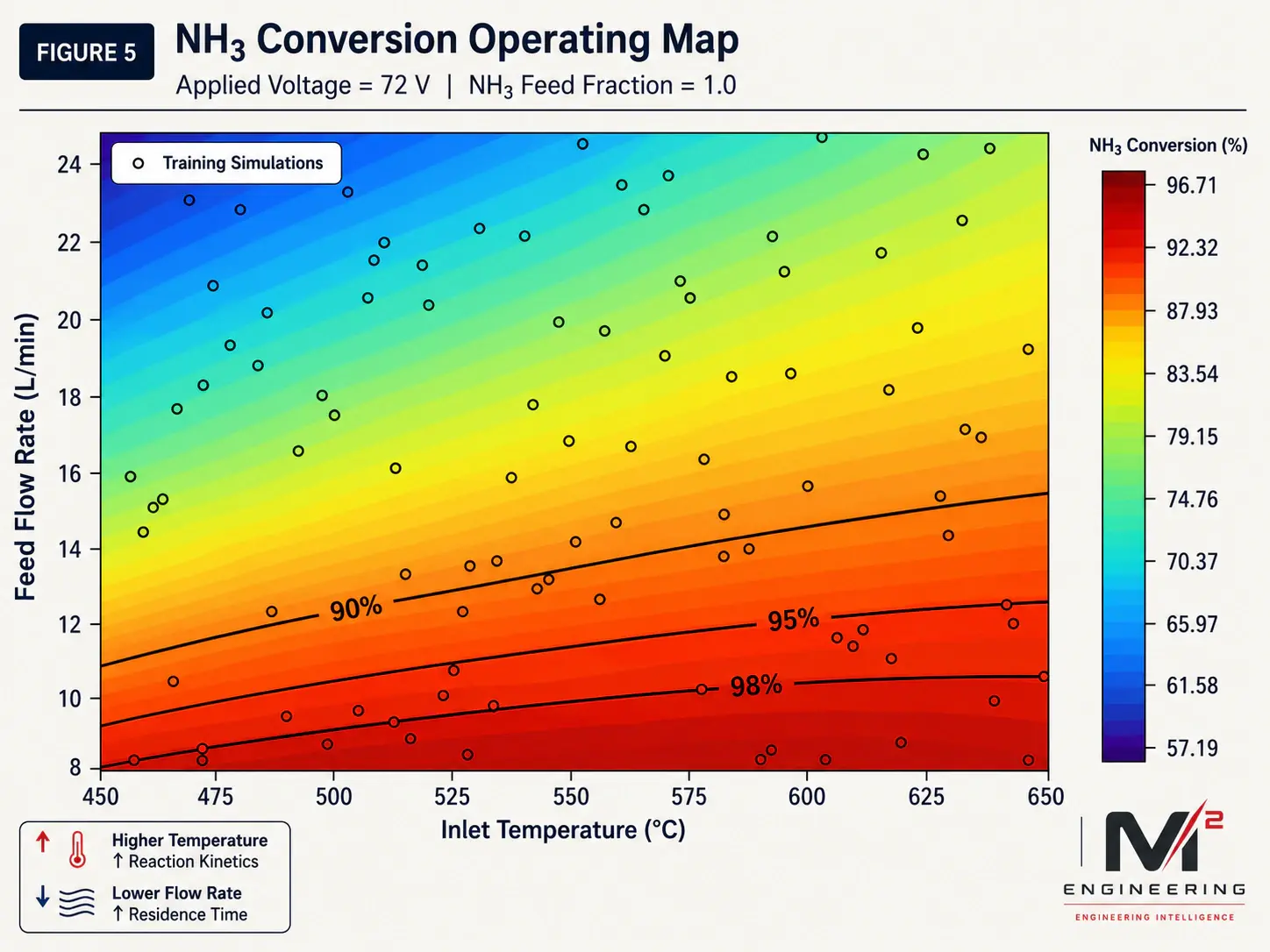
Two dominant trends emerge immediately. Conversion increases with increasing inlet temperature and decreases with increasing feed flow rate. While this behavior may appear intuitive, the contour structure provides valuable insight into the competing physical mechanisms that govern reactor performance.
Temperature primarily influences reaction kinetics. Ammonia decomposition is highly temperature dependent, and reaction rates increase rapidly as reactor temperature rises. As a result, increasing the inlet temperature accelerates ammonia conversion throughout the catalyst bed and allows a greater fraction of the incoming ammonia to decompose before reaching the reactor outlet.
Feed flow rate influences performance through an entirely different mechanism. Increasing throughput reduces the amount of time available for reaction within the fixed reactor volume. Even if reaction kinetics remain unchanged, shorter residence times limit the extent to which ammonia can be converted before leaving the reactor. Consequently, higher throughput generally leads to lower conversion.
The contour lines reveal how these two effects compete with one another. At lower temperatures, conversion becomes highly sensitive to changes in flow rate because reaction kinetics remain relatively slow. Under these conditions, even modest reductions in residence time can produce significant decreases in conversion. As temperature increases, the reaction proceeds more rapidly and the reactor becomes less sensitive to moderate changes in throughput.
From an engineering perspective, the 90%, 95%, and 98% conversion contours are particularly informative because they define practical operating boundaries rather than isolated operating points. Instead of searching through individual simulations, a designer can immediately identify combinations of temperature and flow rate capable of achieving a desired conversion target. Multiple operating pathways become visible. Higher temperatures can compensate for increased throughput, while lower flow rates can offset reductions in thermal input.
Perhaps the most important observation from Figure 5 is that there is no single optimal operating condition. Instead, there exists a family of operating points capable of delivering similar conversion levels. This flexibility becomes increasingly important when additional constraints such as energy consumption, reactor size, thermal integration, and process economics are considered. The operating map therefore serves not only as a performance visualization, but also as a practical design tool for identifying feasible operating windows across the broader reactor design space.
Voltage–Flow Rate Operating Map
While the previous operating map focused on the interplay between temperature and residence time, an equally important design question remains: how effectively can electrical energy be used to sustain conversion at higher throughput conditions? This question lies at the heart of electrified reactor technology. Conventional ammonia crackers rely primarily on externally supplied thermal energy. As throughput increases, conversion often declines because reactants simply spend less time inside the reactor. Electrified systems introduce an additional degree of freedom. By increasing electrical input, heat can be generated directly within the catalyst structure, potentially compensating for the loss of residence time associated with higher flow rates.
To investigate this relationship, reactor conversion was evaluated across a range of applied voltages and feed flow rates while maintaining a constant inlet temperature of 600°C and a pure ammonia feed. The resulting operating landscape is shown in Figure 6.
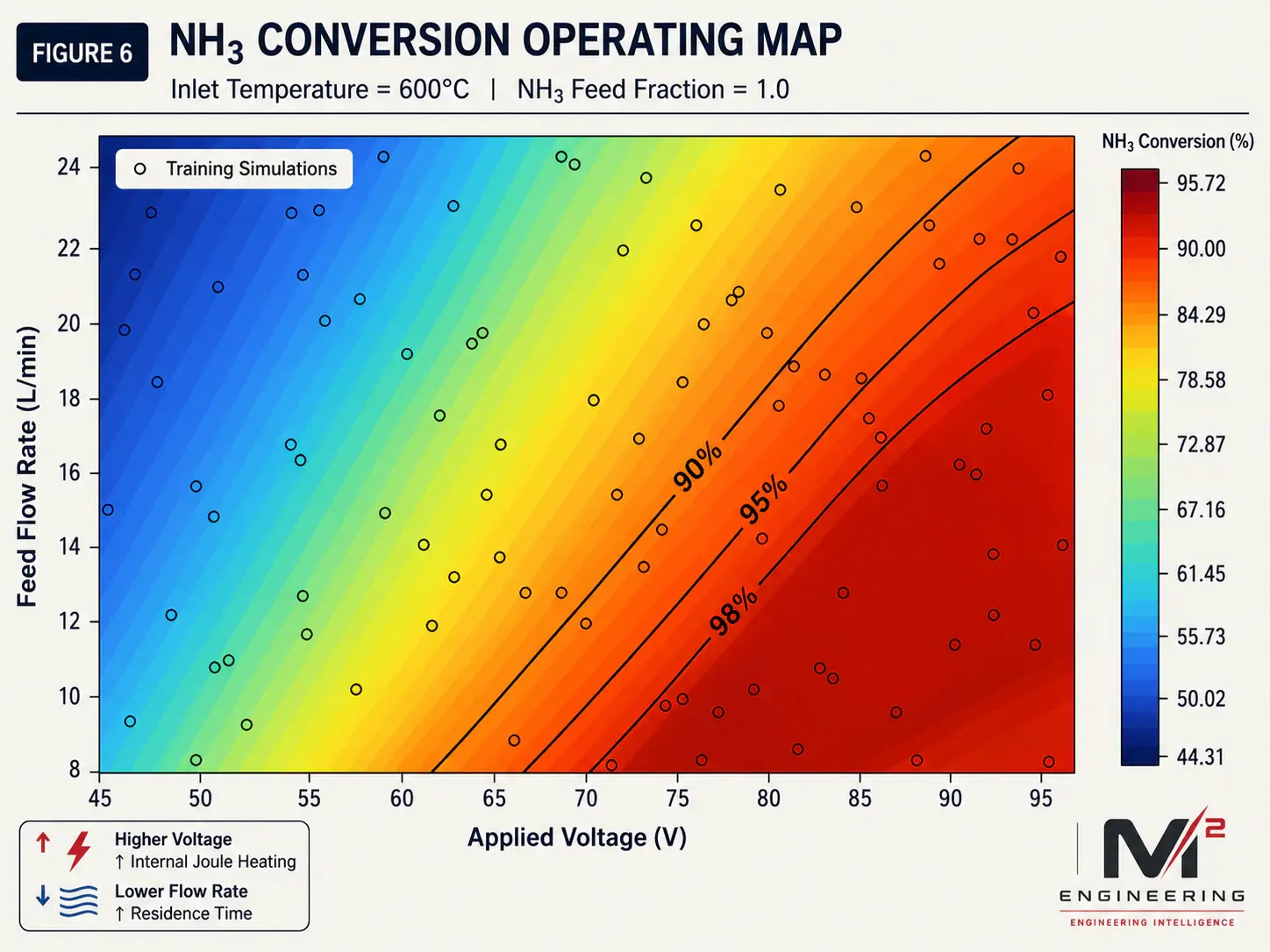
As expected, increasing feed flow rate generally reduces conversion. Higher throughput shortens residence time within the catalyst bed, limiting the extent to which ammonia can decompose before reaching the outlet. This trend is visible throughout the operating space and reflects one of the fundamental constraints of reactor design.
The influence of applied voltage is markedly different. Increasing voltage increases the rate of internal Joule heating generated within the conductive catalyst structure. The resulting temperature increase accelerates ammonia decomposition kinetics and promotes higher conversion. In effect, electrical energy is delivered directly to the reaction zone, allowing the reactor to generate additional thermal energy precisely where it is needed.
The contour structure reveals the interaction between these competing effects. Regions of high throughput that would otherwise exhibit reduced conversion can often be shifted back into favorable operating regimes through increased electrical input. In practical terms, electrical energy can partially compensate for reduced residence time, providing reactor designers with a level of flexibility that is difficult to achieve in conventionally heated systems.
The 90%, 95%, and 98% conversion contours are particularly useful because they define performance boundaries across the operating space rather than isolated operating points. A designer targeting 95% conversion, for example, can immediately identify multiple combinations of throughput and electrical input capable of satisfying that requirement. Some operating conditions achieve the target through lower flow rates and modest electrical input, while others rely on increased Joule heating to sustain conversion at higher throughput.
Another important observation emerges from the spacing of the contour lines. The influence of voltage is not uniform throughout the operating space. In certain regions, relatively small increases in electrical input produce substantial improvements in conversion. In others, significantly larger voltage increases are required to achieve comparable gains. This behavior reflects the nonlinear nature of ammonia decomposition kinetics and highlights the importance of evaluating reactor performance across the broader operating envelope rather than at a single operating point.
From an engineering perspective, Figure 6 illustrates one of the defining advantages of process electrification. Reactor performance is no longer governed solely by geometry, residence time, and external heating conditions. Electrical input becomes an active design and control variable capable of influencing conversion in real time. This capability creates opportunities for operational flexibility, dynamic process control, and future integration with variable renewable electricity sources.
More importantly, the operating map demonstrates that conversion targets can often be maintained through multiple combinations of throughput and electrical input. This flexibility allows reactor designers to balance productivity, energy consumption, and process constraints according to the specific objectives of a given application. In many respects, this ability to trade electrical energy for reactor performance represents one of the most compelling advantages of electrified chemical processing.
Temperature–Voltage Operating Map
The previous operating maps explored the influence of residence time in combination with either thermal or electrical inputs. While these analyses revealed important performance tradeoffs, they did not directly address one of the central questions associated with electrified reactor design: how should thermal and electrical energy be balanced to achieve a desired level of reactor performance?
In conventional ammonia cracking systems, conversion is primarily increased through higher operating temperatures supplied by external heating systems. Electrified reactors introduce an alternative pathway. Instead of relying exclusively on thermal preheating, energy can be delivered directly to the catalyst structure through internal Joule heating. Both approaches ultimately influence reactor temperature and reaction kinetics, but they do so through fundamentally different mechanisms.
To investigate this relationship, reactor conversion was evaluated across a range of inlet temperatures and applied voltages while maintaining a constant feed flow rate of 16.5 L/min and a pure ammonia feed. The resulting operating landscape is shown in Figure 7.
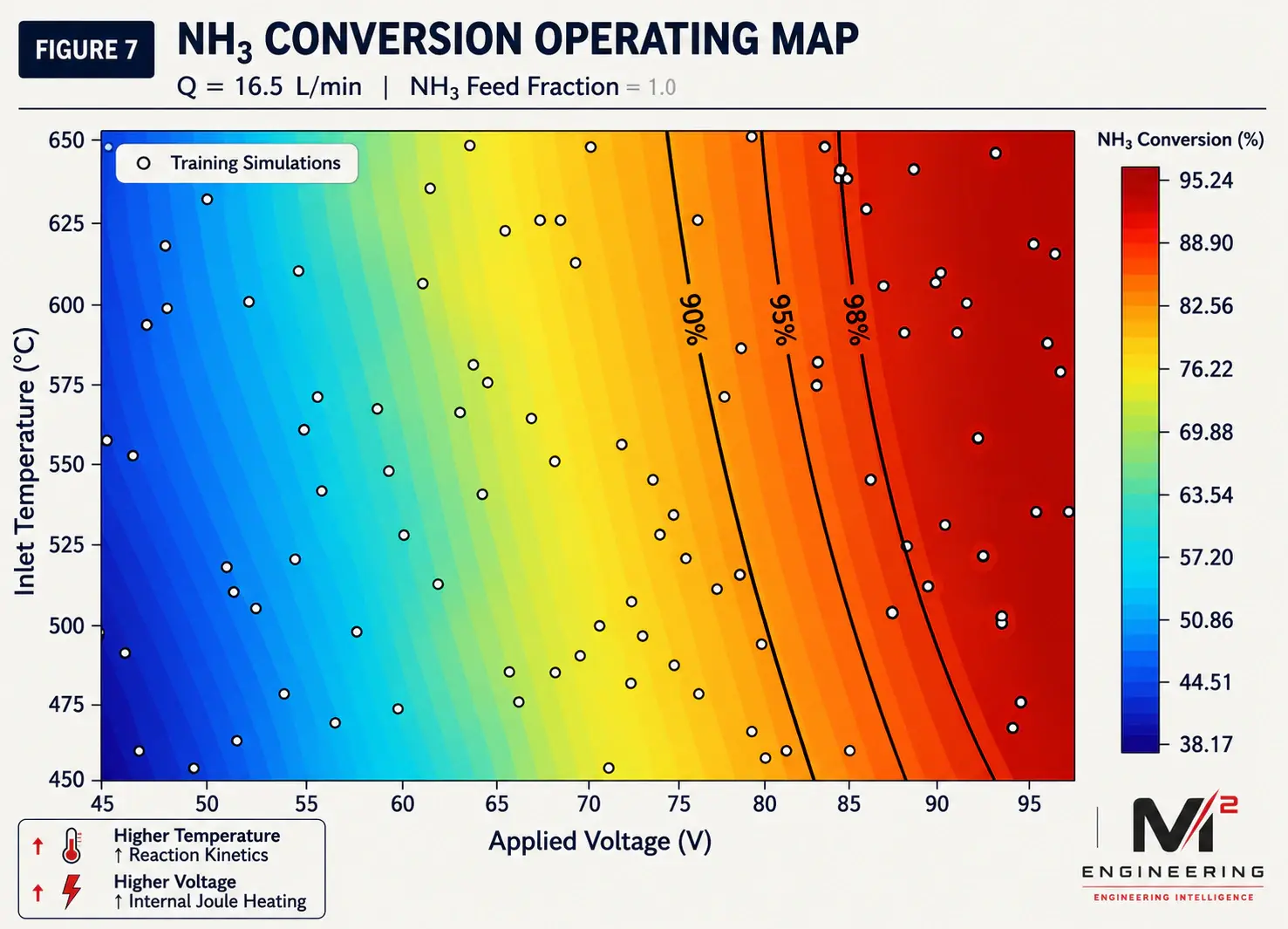
Unlike the previous maps, both axes in Figure 7 represent energy inputs. The horizontal axis corresponds to thermal energy supplied before the reactor through feed preheating, while the vertical axis represents electrical energy delivered directly within the catalyst bed. The resulting contour structure therefore provides insight into how these two energy pathways interact to determine reactor performance.
The first observation is that both variables strongly influence ammonia conversion. Increasing inlet temperature generally shifts the reactor toward higher conversion levels, while increasing applied voltage produces a similar effect. This behavior is consistent with the underlying reaction physics. Ammonia decomposition is highly temperature dependent, and both thermal preheating and Joule heating ultimately act by increasing the thermal environment experienced by the reacting gas.
The contour structure, however, reveals that the two variables are not entirely interchangeable. If temperature and voltage contributed identically to reactor performance, the conversion contours would form simple linear relationships across the operating space. Instead, the contours exhibit curvature and varying spacing, indicating that the effectiveness of each energy pathway depends on the broader operating condition.
At lower inlet temperatures, conversion becomes particularly sensitive to electrical input. Under these conditions, additional Joule heating provides a substantial increase in local reactor temperature, accelerating reaction kinetics and significantly improving ammonia decomposition. In effect, electrical energy compensates for insufficient thermal preheating and allows the reactor to maintain favorable conversion levels without requiring extreme inlet temperatures.
As inlet temperature increases, the reactor gradually enters a different operating regime. Reaction kinetics become increasingly favorable, and additional voltage produces smaller incremental improvements in conversion. Although electrical heating continues to enhance performance, the marginal benefit of each additional volt decreases as the reactor approaches regions of already high conversion. This behavior is reflected in the changing contour spacing across the operating map.
From a practical standpoint, the most valuable aspect of Figure 7 is the flexibility it reveals. The 90%, 95%, and 98% conversion contours define families of operating conditions rather than individual operating points. A designer may choose to achieve a given conversion target through higher thermal preheating and lower electrical input, or alternatively through lower inlet temperatures and increased Joule heating. Both approaches can deliver comparable reactor performance while relying on different energy distribution strategies.
This flexibility becomes particularly important when broader system considerations are taken into account. Electricity cost, waste heat availability, renewable energy integration, startup requirements, and process constraints can all influence the preferred operating strategy. Rather than prescribing a single solution, Figure 7 provides a framework for evaluating those tradeoffs and identifying operating regions that satisfy both conversion targets and system-level objectives.
Viewed collectively, Figures 5 through 7 reveal the multidimensional nature of reactor performance. Temperature, electrical input, and residence time do not operate independently. Instead, they interact through a complex network of transport phenomena, heat generation, and chemical kinetics. Understanding those interactions is precisely what makes physics-based simulation valuable and what ultimately enables the surrogate model to provide meaningful engineering insight across a broad operating space.
Engineering Insights
While each operating map provides valuable information individually, the most meaningful observations emerge when the results are considered collectively. Several consistent patterns appear throughout the operating space and provide useful guidance for the design and operation of electrified ammonia cracking systems.
The first observation is the dominant role of temperature in governing reactor performance. Across all operating maps, higher temperatures consistently promote ammonia decomposition by accelerating reaction kinetics. Whether the thermal energy originates from feed preheating or internal Joule heating, reactor temperature remains the primary driver of conversion. This reinforces the importance of effective thermal management in electrified reactor systems and highlights why temperature control remains central to reactor design.
The second observation is that conversion cannot be considered independently of residence time. Higher feed flow rates increase reactor throughput but simultaneously reduce the time available for reaction. As a result, improvements in productivity often come at the expense of conversion unless additional energy is supplied to compensate. This tradeoff is fundamental to reactor design and appears consistently throughout the operating space.
A third and particularly important insight is the role of electrical input as an active control variable. Unlike conventional ammonia crackers, where performance is largely governed by reactor geometry and external heating conditions, electrified systems provide a direct mechanism for adjusting internal heat generation through applied voltage. The operating maps demonstrate that electrical energy can partially compensate for reduced residence time and, under certain conditions, substitute for increased thermal preheating. This flexibility represents one of the defining advantages of process electrification and creates opportunities for dynamic operation and future integration with renewable electricity sources.
The final observation is that there is rarely a single optimal operating condition. Instead, each conversion target corresponds to a family of feasible operating points distributed throughout the design space. Multiple combinations of temperature, voltage, and flow rate can achieve similar reactor performance while relying on different energy distribution strategies. This flexibility allows designers to balance conversion, throughput, electrical demand, thermal integration, and process economics according to the requirements of a specific application.
Beyond the reactor itself, this study highlights a broader engineering workflow. High-fidelity simulations remain essential for capturing the underlying physics, but surrogate models can dramatically expand the value of those simulations once the physical behavior has been learned. In this case, a dataset of 103 simulations was transformed into 7,500 reactor evaluations, enabling rapid exploration of operating conditions that would otherwise require substantial computational effort.
The most important outcome is therefore not the surrogate model itself, but the ability to move more efficiently from physics to engineering decisions. By combining high-fidelity simulation with operator learning, it becomes possible to explore larger design spaces, evaluate more alternatives, and gain deeper insight into system behavior without sacrificing the physical foundation on which those insights depend.
Conclusions
Electrified ammonia cracking offers a compelling pathway for distributed hydrogen production by combining the storage and transportation advantages of ammonia with the flexibility of electrically driven process heating. Unlike conventional furnace-heated systems, electrified reactors generate thermal energy directly within the catalyst structure, creating new opportunities for improved thermal efficiency, operational flexibility, and integration with low-carbon electricity sources.
Understanding these systems, however, requires more than conventional reactor analysis. Fluid flow, heat transfer, electrical current transport, species transport, and chemical reaction kinetics interact continuously throughout the reactor volume, creating a strongly coupled physics problem. Capturing these interactions was the primary motivation for the work presented in this study.
A coupled electro-thermal-reactive transport model was developed to investigate reactor behavior across a four-dimensional operating space defined by inlet temperature, applied voltage, feed flow rate, and ammonia feed composition. The resulting dataset of 103 high-fidelity simulations served as the foundation for training a Fourier Neural Operator capable of predicting reactor temperature, velocity, and ammonia concentration fields with strong agreement to the underlying physics.
Validation against previously unseen operating conditions demonstrated mean relative errors of 3.5% for temperature, 3.4% for velocity, and 2.2% for ammonia concentration. More importantly, the trained surrogate transformed a finite dataset of 103 simulations into a practical engineering design tool capable of evaluating 7,500 operating conditions across the reactor design space.
The resulting operating maps revealed several important insights. Reactor conversion is governed by the combined influence of reaction kinetics, residence time, and energy input. Higher temperatures promote ammonia decomposition, higher throughput reduces available reaction time, and applied voltage provides a direct mechanism for adjusting internal heat generation. Together, these variables create multiple operating pathways capable of achieving similar conversion targets, offering a degree of operational flexibility that is difficult to achieve in conventional reactor systems.
Beyond the specific reactor examined here, the broader significance of this work lies in the workflow itself. High-fidelity simulation remains one of the most powerful tools available to engineers for understanding complex physical systems, yet large-scale design exploration often becomes computationally prohibitive. Operator-learning methods provide a bridge between these two worlds. By learning directly from physics-based simulations, surrogate models can extend the reach of high-fidelity analysis while preserving the physical insights embedded within the original dataset.
Perhaps the most important takeaway is that effective engineering workflows do not require choosing between physics and machine learning. Physics establishes understanding. Machine learning accelerates exploration. When combined thoughtfully, the two approaches create capabilities that neither can achieve independently.
In this study, that combination transformed 103 high-fidelity simulations into 7,500 reactor evaluations and converted computational data into actionable engineering insight. More broadly, it demonstrates how the future of engineering analysis may be shaped not by replacing physics-based models, but by extending their reach, enabling engineers to move more rapidly from understanding to prediction, and ultimately from prediction to decision-making.